A late bus, the wrong pickup point, or too little room for bags can turn a well-planned school day into a scramble before students even leave the grounds. A solid school excursion transport checklist helps schools avoid those problems early, with clear decisions around vehicle size, timing, supervision, access, and communication.
For teachers, office staff, and excursion coordinators, transport is rarely just about getting from A to B. It affects roll marking, duty of care, arrival times, venue bookings, student behaviour, and the overall flow of the day. When transport is planned properly, everything else runs more smoothly.
The most useful checklist starts with the basics, then moves into the details that often get missed. Passenger count comes first, but not just student numbers. You also need to confirm teachers, support staff, parent helpers if relevant, and whether anyone is joining the group at a different location.
Vehicle size should be matched to the real headcount, not the expected one from two weeks ago. That sounds obvious, but last-minute changes are common on school trips. If the group is tight on seats, there is no flexibility for staff movement, student spacing, or additional equipment. If the vehicle is too large, the cost may be higher than necessary. The right fit usually comes from accurate numbers and a transport provider that offers more than one vehicle type.
Timing matters just as much as capacity. Your checklist should include departure time, but also student assembly time, roll check time, loading time, and realistic traffic allowances. In Sydney and across NSW, travel times can shift quickly depending on school zones, roadworks, and peak periods. A 9.00 am venue booking may mean leaving far earlier than the raw travel estimate suggests.
Pickup and drop-off details should also be written down precisely. Not just the school name, but the exact gate, driveway, or bus zone. The same applies to the destination. Large venues, museums, sports grounds, and camps often have specific coach access points, and using the wrong entrance can cause delays or safety issues.
Most excursion transport problems are not dramatic. They are small gaps in planning that stack up. A school may confirm the date but forget to mention that half the group is carrying sports gear. A venue may be booked without checking whether a full-size coach can access the site. Staff may assume the driver has the mobile number of the lead teacher, while the teacher assumes the school office passed it on.
That is why a school excursion transport checklist works best when it is practical rather than overly formal. It should help staff confirm the details that affect the journey on the day, not just tick boxes for compliance.
There is also a balance to strike between efficiency and caution. A single larger vehicle may be simpler to manage than splitting students across multiple minibuses, but site access or budget may point the other way. A very early departure may avoid traffic, but it can also create challenges for student arrival and supervision. Good planning means looking at those trade-offs before booking, not after.
Not every school trip needs the same type of transport. A local museum visit with one class has different requirements from a sports carnival, an interschool event, or an overnight camp. The checklist should prompt schools to consider group size, trip length, equipment, comfort, and road conditions.
For smaller groups, a minibus may be the most cost-effective option. For larger year groups or combined classes, a full-size bus or coach is usually more practical and easier to supervise. If students are carrying instruments, eskies, overnight bags, or sporting equipment, luggage space needs to be confirmed in advance. Seat count alone does not tell the whole story.
Comfort also matters on longer journeys. If students are travelling for several hours, the vehicle should suit that distance. A short suburban transfer and a regional day trip are different jobs. Schools do not need luxury for the sake of it, but they do need safe and comfortable travel that supports the schedule rather than adding stress to it.
Transport planning for schools always sits alongside duty of care. That means your checklist should clearly record who is supervising students during boarding, where students will wait before departure, and how rolls will be checked.
It helps to nominate one staff member as the transport contact for the day. That person should have the driver details, booking information, route notes, and the authority to make quick decisions if timings change. Without a clear point of contact, even minor delays can become harder to manage.
Student needs should be reviewed before the trip, not on the morning of departure. That includes accessibility requirements, medical considerations that affect seating or travel time, and any behavioural support arrangements that may influence where students sit or how staff are positioned on the vehicle.
Emergency planning should also be part of the transport process. Schools do not need to overcomplicate this, but they should know what happens if the venue runs late, weather changes, or pickup needs to move. A checklist is useful here because it puts practical questions in one place before they become urgent.
When schools are ready to book, the checklist should cover the operational details a transport provider needs to quote and plan accurately. These are the items most likely to affect price, timing, and vehicle suitability:
Providing all of this upfront saves time and usually leads to a more accurate booking. It also reduces the chance of changes later, which can affect availability.
A school excursion booking should feel straightforward, but that does not mean schools should rush it. It is reasonable to ask how the provider handles school groups, what vehicle options are available, and whether the quote includes the full journey as planned.
This is also the point to confirm whether waiting time is included, how multi-stop trips are priced, and what happens if the schedule shifts on the day. Some excursions run exactly to plan. Many do not. A provider that understands school transport will usually help identify pressure points early, especially around loading times and venue access.
For schools managing tight budgets, price matters, but cheapest is not always best value. Reliability, clear communication, and the right vehicle can prevent the kind of disruption that ends up costing more in time and risk. That is why many schools prefer a pre-booked charter with an experienced driver over trying to coordinate multiple cars or piecemeal options.
Transport should reduce admin, not add to it. The best arrangements are the ones where staff know exactly where the vehicle will be, students can board safely, and the day starts calmly. That comes from good information, a realistic schedule, and a provider that is used to group movement rather than ad hoc passenger trips.
For larger excursions, it can help to prepare a simple run sheet for staff with boarding order, seating approach if needed, contact details, and return instructions. This does not have to be long. A single page often does the job. The point is clarity.
It is also worth checking the return plan with the same care as the outbound trip. Schools sometimes focus on getting to the venue and treat the trip back as automatic. But afternoon pickups can be harder if venues are crowded, students are tired, or traffic has built up. Confirming the return point and pickup procedure is one of the simplest ways to avoid a messy finish.
When a school excursion transport checklist is used properly, it supports safer travel, smoother supervision, and better time management across the whole day. For schools booking regular trips or one-off events, working with a reliable bus hire provider such as Foxbus can make that process easier by matching the vehicle to the group, the route, and the timing from the start.
The simplest test is this: if someone else had to take over your excursion booking tomorrow, would the transport plan still make sense? If the answer is yes, your checklist is doing its job.



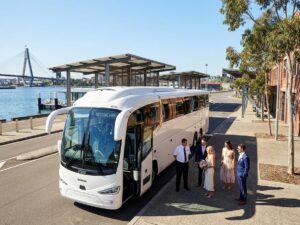
Hire the Right Bus for the Right Occasion
