When a school excursion runs late, students get restless, teachers start fielding parent calls, and the whole day can slip off schedule. That is why a school charter safety guide matters well before anyone steps onto the bus. Good transport planning protects students, supports staff, and makes the trip easier to manage from departure to return.
For schools across Sydney and NSW, charter safety is not just about the condition of the vehicle. It includes driver standards, boarding procedures, route planning, supervision, emergency readiness, and clear communication with the transport provider. A bus that arrives on time with the right seating capacity is a good start, but safe and comfortable travel depends on the details being handled properly.
Some schools treat bus safety as a simple booking task. In practice, it is an operational decision with duty-of-care implications. The right charter arrangement should give teachers confidence that the vehicle suits the group, the driver understands the itinerary, and the travel plan works for the age of the students involved.
A useful school charter safety guide starts with the basics. Is the operator accredited for passenger transport? Are the vehicles serviced and fit for the trip length? Does the driver have experience with school groups? Can the provider manage luggage, sports gear, musical instruments or camp equipment without overcrowding the aisle or entry points?
Beyond that, schools should think about supervision and timing. A short transfer to a local venue has different risks from a full-day excursion or multi-stop regional journey. Younger students may need a simpler boarding process and tighter headcounts. Senior students may be easier to move, but larger numbers often mean more complexity around pick-up zones, staggered departures and return times.
The safest option is not always the biggest bus available. It is the vehicle that best matches passenger numbers, luggage requirements and the nature of the journey. If a group is squeezed into a vehicle with limited space, movement becomes harder to manage and equipment can end up stored poorly. If the bus is too large for the pick-up location or venue access, boarding can become less controlled.
For a small class group, a minibus may be the practical choice. For year-level excursions, interschool sport, camps or combined group travel, a larger coach can provide better comfort and a more orderly trip. The point is to match the vehicle to the job rather than trying to make one option fit every scenario.
Comfort also plays a safety role. Students who are seated properly and have enough space are generally easier to supervise. On longer journeys, that matters. Fatigue, boredom and unnecessary movement through the aisle can all create avoidable issues. A vehicle with suitable seating, climate control and room for bags helps keep the group settled.
Schools often focus first on the bus itself, but driver capability is just as important. An experienced driver does more than operate the vehicle. They support the schedule, understand safe pickup and drop-off practices, adapt to traffic conditions, and work calmly around school groups.
This is especially important when itineraries involve busy urban areas, event congestion, campsites, or regional roads. A professional driver who has handled school charters before will usually anticipate common issues before they become problems. That includes safe stopping locations, managing delays without rushing, and communicating clearly with the trip organiser.
Schools should also expect professionalism in presentation and conduct. Students notice how adults behave, and staff need confidence that the driver will be reliable, respectful and easy to work with throughout the day.
A strong school charter safety guide is built around preparation. The safest trips tend to be the ones where nothing important is left to chance. Before confirming a booking, schools should have a clear passenger count, pick-up and return times, destination details, supervision ratios, and any special requirements.
Medical needs should be considered as part of the travel plan, even when they are primarily managed by school staff. If a student is prone to motion sickness or has mobility needs, the seating plan may need adjustment. If the group is carrying medication, sports equipment or camp bags, those details should be factored in early rather than mentioned on the morning of departure.
Route planning also deserves attention. A direct route is not always the best route if school access is limited or the destination has tight arrival windows. It helps to confirm where the bus can safely stop, where students will wait before boarding, and how staff will supervise loading. Simple planning here can prevent confusion in car parks, on narrow roads, or at crowded venue entrances.
The highest-risk moments are often the least dramatic ones – students gathering near the kerb, bags being loaded quickly, or a rushed headcount before departure. These transition points need structure.
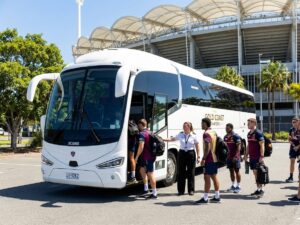
Students should know where to stand, when to board, and who they report to before taking a seat. Teachers and coordinators should have a headcount process that is repeated at every key point, not just at the start of the trip. On return journeys, tired students can be less attentive, so the same discipline matters at the end of the day as much as at the beginning.
Drop-off conditions also vary. A museum with a designated coach bay is very different from a sports ground with mixed traffic, or a camp facility with gravel access roads. The transport provider should understand the site conditions in advance so the approach is safe and orderly.
Transport problems often come back to poor communication rather than poor intent. If the charter provider does not know the exact group size, luggage volume or revised schedule, small issues can become bigger on the day.
The booking contact at the school should provide one clear itinerary and nominate a lead staff member for travel-day coordination. In return, the operator should confirm the vehicle type, pick-up time, driver arrangements and any practical limitations. If there are multiple stops, split groups or changing return times, those points should be agreed early.
It also helps to set expectations around delays. Sydney traffic, weather and venue congestion can affect timings, and pretending otherwise is not useful. What matters is how those delays are managed. Schools need a provider that communicates promptly and works to keep the journey safe and controlled rather than hurried.
Different trip types call for slightly different checks. Excursions usually need efficient metro travel and dependable timing. Camps may require extra luggage capacity and more regional road experience. Sports travel often involves wet gear, larger equipment loads and tighter arrival deadlines.
That is why a one-size-fits-all approach rarely works. The safer option is a tailored charter setup based on the actual trip. A provider with a broad fleet and experienced drivers can usually match the booking more accurately, whether the school needs a smaller minibus for a local academic event or a full-size coach for a camp departure.
For schools comparing providers, price still matters, but it should be weighed alongside reliability, vehicle suitability and service clarity. The cheapest quote can create problems if it leaves no room for practical needs. Good value is not just a lower fare. It is a charter service that arrives prepared, runs to plan and helps staff manage students with less pressure.
A few direct questions can quickly show whether a charter provider is a good fit. Ask about vehicle size options, driver experience with school groups, luggage capacity, pick-up logistics, and what happens if timings change. Confirm the full itinerary and ask how the provider handles multi-stop journeys or longer-distance travel.
It is also worth checking how much detail the operator asks from you. A provider that takes school transport seriously will want to know the passenger count, age group, destination, trip purpose and any specific requirements. That level of planning is usually a good sign, because it means the job is being assessed properly rather than treated as a basic transfer.
For schools that book transport regularly, consistency matters too. Working with a dependable charter partner can simplify future planning, especially when excursion schedules, sports fixtures and camp dates stack up across the term. Providers such as Foxbus support this by offering a wide fleet range, experienced drivers and practical charter planning for different group sizes and trip types.
Safe school transport does not come down to one feature or one checklist item. It comes from choosing a provider that treats the journey as part of the school’s duty of care, not just a booking on the run sheet. When the transport is planned properly, students travel safely, staff stay in control, and the day has a much better chance of running as it should.



Hire the Right Bus for the Right Occasion
