Trying to move a group across Sydney can get messy fast. One person is running late, another cannot find parking, someone else has brought more luggage than expected, and suddenly a straightforward trip is anything but. That is why group transport Sydney organisers can rely on is less about getting from A to B and more about keeping the whole day on track.
For businesses, schools, families and event planners, the right transport setup saves time, reduces stress and gives everyone a clear plan. A professional charter service with the right vehicle and an experienced driver removes the need to coordinate multiple cars, chase arrival times or hope public transport lines up with your schedule. It is a practical decision, and in many cases, the most cost-effective one as well.
Sydney is not a city where group travel works well by accident. Traffic changes quickly, event precincts get congested, airport pick-ups need timing, and some venues have limited parking or drop-off access. If you are moving a small team to a conference, wedding guests between venues, or a full school group to an excursion, the transport plan affects the whole experience.
The main issue is not simply vehicle size. It is matching the service to the day. A short airport transfer has different needs from a multi-stop wine tour. A corporate transfer may require punctual arrival windows and a tidy presentation, while a sporting group may need extra boot space for equipment. Good planning starts with the purpose of the trip, then works backwards from passenger numbers, luggage, timing and route.
That is also where many organisers underestimate the value of charter transport. They compare it to private cars or rideshare costs on paper, but overlook the time lost in coordinating separate arrivals, reimbursements, parking fees and missed connections. A single booked service often delivers better value because it keeps the group together and the schedule under control.
The best vehicle is not always the biggest one available. It needs to fit the number of passengers comfortably, with enough room for luggage, prams, sports gear or event materials if required. For smaller groups, a 7-seater or minibus can be the right fit and avoids paying for unused capacity. For larger bookings, a full-size bus or coach gives better comfort and keeps everyone travelling together.
A practical way to think about it is by journey type. Airport runs often need a strong balance between seating and luggage space. Corporate bookings usually prioritise punctuality, comfort and a professional driver. School transport needs a service that is organised, safety-focused and easy to manage. Social trips such as concerts, races, festivals and family events benefit from fixed pick-up points and a clear return plan.
There is no single formula that suits every booking. A 20-person group heading to a daytime function may be well served by a minibus, while the same number travelling with suitcases to the airport could need a larger vehicle. That is why tailored quoting matters. It allows the transport to be matched to the actual job, rather than forcing the job to fit a standard package.
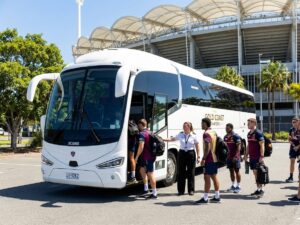
One of the most useful parts of a broad fleet is flexibility. Smaller vehicles work well for executive transfers, family events and private outings where a full coach would be excessive. Mid-sized minibuses suit wedding guest transport, tours and corporate teams. Larger buses and luxury coaches are often the best option for schools, conferences, sporting groups and major events where moving everybody in one run is the simplest approach.
This range matters because underbooking can create immediate problems, while overbooking can push costs up unnecessarily. A reliable provider should ask the right questions early, including passenger count, luggage needs, number of stops and how long the group will be on board. Those details shape whether the trip feels easy or cramped.
Not all transport services are built for group logistics. Some operators focus on point-to-point trips only, while others are set up to handle more complex charters with multiple pick-ups, waiting time and return journeys. If your group needs more than a basic transfer, look for a provider with experience across different trip types and passenger volumes.
Clear pricing is a major factor. Organisers want to know what is included so they can budget properly and avoid surprises later. All-inclusive pricing is especially useful for schools, businesses and event planners who need certainty before they approve a booking. It also makes quote comparisons more meaningful.
Driver quality matters just as much as vehicle quality. An experienced driver does more than operate the bus. They help keep the service punctual, manage access points efficiently and support a calm, safe travel experience. For customer-facing bookings such as weddings, corporate events and airport transfers, professionalism from the driver shapes the impression the whole service leaves.
Just as importantly, the provider should make the booking process straightforward. A good quote process should cover the basics quickly – where you are going, how many passengers are travelling, what luggage is involved, and whether the trip is one-way, return or multi-stop. When that information is handled properly from the start, the day itself runs more smoothly.
Airport transfers are one of the most common reasons groups book a bus with driver. They remove the hassle of parking, separate arrivals and oversized taxi costs, especially when the group has luggage. For interstate business teams, family reunions or tour groups, a single transfer is often the cleanest option.
Corporate travel is another strong fit. Staff shuttles, conference transfers, client transport and off-site meetings all benefit from reliable scheduling and a professional presentation. It also helps businesses avoid the risk of employees arriving at different times or getting delayed by parking and route confusion.
School transport needs dependable planning and a provider that understands excursion logistics. Timing, supervision and route clarity all matter. The same is true for university groups travelling to events, campuses or regional activities.
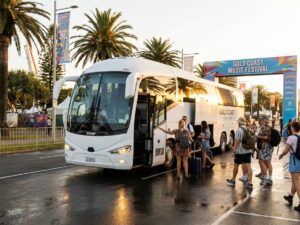
For private groups, charter transport works well for weddings, birthday celebrations, family functions, races, concerts, festivals, snow trips and wine tours. These trips often involve fixed event times, busy venues and return travel late in the day. Having one vehicle and driver assigned to the group reduces friction and makes the whole outing easier to manage.
A single transfer is relatively simple. Multi-stop charter work is where transport planning becomes more valuable. Picking up guests from several suburbs, running a tour itinerary, moving attendees between venues, or combining airport and hotel transfers on the same booking all require coordination.
This is where an experienced charter operator can save the organiser a lot of time. Instead of trying to build the route around multiple private vehicles, the group can travel to a clear plan with one point of contact. That does not just improve convenience. It can reduce delays, missed connections and confusion on the day.
It is tempting to patch together group travel using rideshare apps, employee cars or public transport, especially for smaller groups. Sometimes that works. But if timing matters, the hidden costs start to show.
Separate vehicles mean separate arrival times. Parking costs can add up quickly in Sydney. Reimbursements create admin. Public transport may be cheaper per person, but it is less useful when the group is carrying luggage, travelling early, attending formal events or heading somewhere with poor access. If one part of the plan fails, the whole schedule can slip.
A charter booking is not always the lowest headline price, but it often gives better overall value because it reduces uncertainty. For many organisers, that reliability is worth more than a small saving that disappears as soon as the day becomes complicated.
The most successful bookings start early and provide accurate details. Passenger numbers, pick-up times, venue access, luggage requirements and any special timing should be confirmed as soon as possible. That helps the operator allocate the right vehicle and build a service that fits the trip properly.
It also helps to be realistic about contingencies. Sydney traffic, venue rules and event crowding can affect travel times, so a sensible schedule matters. Building in a little buffer is usually better than planning to the minute and hoping for perfect conditions.
For customers who want a straightforward solution, the best approach is simple. Choose a provider that offers the right vehicle range, experienced drivers, clear pricing and a booking process that is easy to manage. That is the model Foxbus is built around, whether the job is a small private transfer or a larger charter across Sydney and beyond.
If you are organising group travel, the goal is not to make transport look impressive. It is to make it work properly, so everyone arrives safely, comfortably and on time.


Hire the Right Bus for the Right Occasion
