A wedding can run perfectly on paper and still come unstuck when guests start asking the same question at once – how are we getting there, and how are we getting back? Choosing the best transport for wedding guests is not just about moving people from A to B. It affects arrival times, the mood of the day, guest safety, and how smoothly your schedule actually runs.
For most weddings, the right answer is not a fleet of individual cars or hoping rideshare will cover the gap. It is a planned group transport option that matches your venue, guest numbers, timing, and budget. When transport is handled properly, guests arrive together, on time, and without the stress of parking, directions, or late-night return travel.
The best option depends on your wedding setup, but for most couples and planners, a minibus or coach with a professional driver is the most practical choice. It gives you one clear pick-up plan, one arrival window, and one provider managing the trip. That is especially useful for regional venues, wineries, private properties, and any location where parking is limited or accommodation is spread out.
Cars can work for very small guest groups, especially if everyone is staying nearby and the venue has easy access. But once you are dealing with multiple households, elderly relatives, out-of-town guests, or a reception that runs late, individual travel starts creating problems. Some guests get lost, some arrive too early, others arrive late, and someone always ends up worrying about who is fit to drive home.
A bus or minibus removes most of that friction. Guests know where to be, when to be there, and how they are getting back.
Wedding transport is often treated as an extra, but in many cases it should be part of the core event plan. If the ceremony and reception are in different locations, or the accommodation is separate from both, transport quickly becomes a logistics issue rather than a nice-to-have.
Group transport helps keep the day on schedule. If 40 guests are all finding their own way to a ceremony, your start time becomes flexible whether you like it or not. If those same 40 guests are travelling on a pre-booked coach, your timing is far easier to control.
There is also the guest experience to consider. Weddings are long days. People may be in formal wear, wearing heels, travelling with children, or visiting from interstate. Clear transport takes pressure off guests and makes attendance easier. That matters even more when your venue is outside metro areas or has limited parking.
Then there is safety. If alcohol is being served, return transport is one of the simplest ways to reduce risk and avoid putting guests in awkward situations about driving.
Not every wedding needs a full-size coach. The best transport for wedding guests depends heavily on numbers and how your guests are distributed.
For small weddings or VIP transfers, a 7-seater or 11 to 14-seat minibus can be ideal. These work well when you are moving close family, the bridal party, or a select group from a hotel to the venue. They are also useful when guest accommodation is split across a few nearby locations and you need short, efficient runs.
If you have around 20 to 30 guests needing transport, a 20 to 24-seat minibus or a 30-seat bus is often the most cost-effective fit. This size suits weddings where only part of the guest list needs transport, such as interstate guests or those staying at nominated accommodation.
For bigger events, a 48-seat bus or 50-plus seat coach keeps things simple. One larger vehicle is often easier to manage than multiple smaller ones, provided your pick-up points are practical and the venue can accommodate coach access. For weddings with over 60 guests needing transfers, two coordinated vehicles may be the better option, particularly if you need separate return times.
Venue style has a direct effect on transport planning. A CBD wedding with nearby hotels is different from a rural property, a coastal reception, or a winery in regional NSW.
If your venue has limited parking, narrow access roads, or no easy rideshare coverage, pre-booked guest transport becomes much more important. The same applies if guests are staying in scattered accommodation or if mobile reception is patchy. You do not want guests trying to follow maps down dark country roads after the reception.
It is also worth checking whether your venue has specific access conditions for larger vehicles. Some venues have designated drop-off zones, while others may require smaller minibuses because of turning space or driveway width. This is where experience matters. An operator that regularly handles charter work can help match vehicle size to actual site conditions, not just passenger numbers.
This is where wedding transport becomes more flexible than many people realise. The best setup depends on how your day is structured.
A one-way transfer is suitable when guests only need help getting to the venue and can make their own arrangements later. This can work for lunch weddings, city receptions, or events where many guests are staying on-site.
Return transport is the most common option for evening weddings. It gives guests certainty and usually delivers the best overall convenience. If the reception involves drinks, dancing, and a late finish, a planned return service is usually the safest and most practical choice.
A shuttle service is useful when guests are arriving from different places or when the venue is close to a cluster of accommodation. Rather than one large transfer, a shuttle can cycle between hotels and the venue before and after the event. This works especially well for larger weddings or multi-location days, but it needs tighter timing and clear communication.
Even the right vehicle will not help if the schedule is unrealistic. Wedding transport should allow for traffic, loading time, late guests, and the fact that formal events rarely run exactly to plan.
As a general rule, it is smart to have guests arrive earlier than the official ceremony start time. That gives people time to find seats, use facilities, and settle in without delaying proceedings. Return trips also need thought. If the last bus leaves too early, guests feel rushed. Too late, and people are left waiting around.
A staggered return can solve this for larger receptions. For example, one vehicle can depart earlier for older guests or families with children, while another handles the later crowd. It costs more than a single departure, but for some weddings it is the better service choice.
The biggest mistake is assuming guests will sort themselves out. Some will, but not always efficiently. Another common issue is underestimating numbers. It is better to know exactly who needs transport rather than make rough assumptions based on RSVPs alone.
Pick-up planning also matters. Too many stops can slow the service and create confusion, while one central collection point may be unrealistic if guests are spread across a wide area. There is usually a balance between convenience and efficiency.
The other mistake is leaving transport until the last minute. Weddings often involve fixed dates, regional demand, and seasonal peaks. Booking early gives you better vehicle choice and more room to tailor the trip around your timeline.
Price matters, but wedding transport should not be chosen on price alone. Reliability, vehicle suitability, and driver experience make a real difference on the day.
Look for a provider that can clearly explain vehicle sizes, timing, pick-up planning, and access requirements. All-inclusive pricing is also valuable because it makes budgeting easier and reduces surprises. For wedding bookings, clear communication is often as important as the vehicle itself.
A provider with a broad fleet is especially useful because your transport can be matched to your numbers instead of forcing your event into a one-size-fits-all solution. That might mean a minibus for a small guest transfer, a coach for the full guest list, or a mix of vehicles for a more complex itinerary. Foxbus, for example, can accommodate everything from small family transfers to large wedding guest movements across Sydney and wider Australia.
If you are trying to keep costs under control, guest transport can still offer strong value. The key is to focus it where it matters most. You may not need to transport every guest. Often the best use of budget is moving the guests who are least likely to drive comfortably – interstate visitors, older relatives, guests staying at selected hotels, or anyone travelling to a remote venue.
Consolidating pick-up points can also improve value. So can choosing return transport only, if most guests can arrive independently but should not be driving home late. The best plan is not always the biggest one. It is the one that solves the actual transport problem without adding unnecessary complexity.
Wedding transport works best when it feels effortless to the people using it. Guests should know where to stand, what time to be ready, and who is getting them home. If you can give them that certainty, you have already made the day easier for everyone involved.



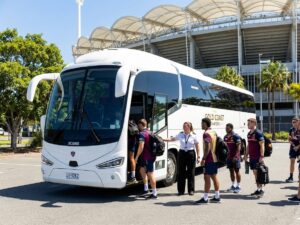
Hire the Right Bus for the Right Occasion
